Air Purifiers For Healthcare Facilities
Medical and Healthcare
Air purifiers for healthcare facilities help lower airborne load in waiting rooms, exam rooms, and staff areas—without disrupting care. Our 7-Stage Filtration combines HEPA for fine particles with activated carbon for odours/VOCs. First reduce sources, then improve ventilation, and finally filter what remains for a consistent, professional result. Start with How It Works to see 7-Stage Filtration, Technology, Features, and Real Results. When you’re ready, Explore Our Products or Request a Clinic Walkthrough for sizing, placement, and noise-level tuning. CDC+1
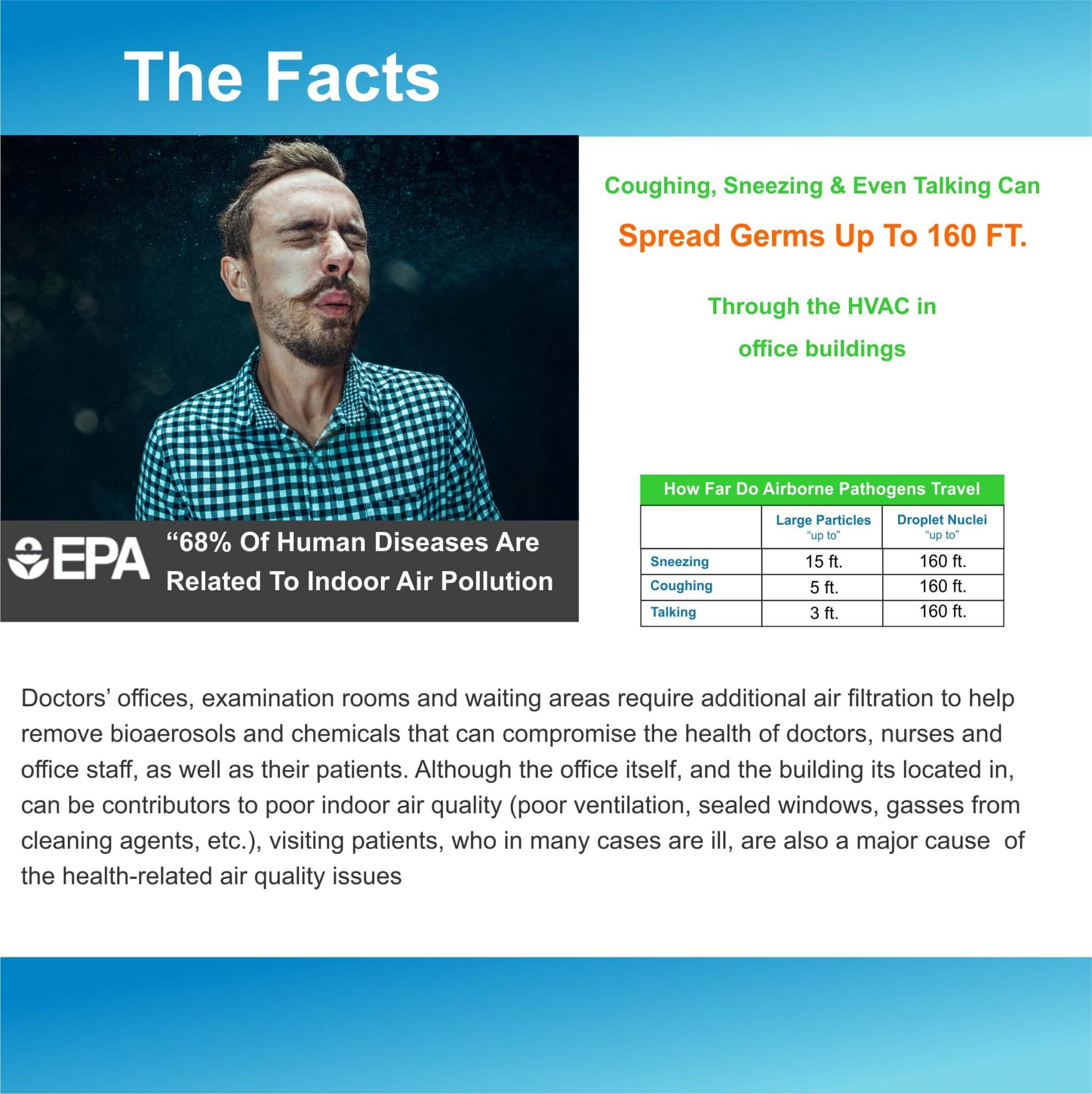
Myth: Hand Sanitizer Replaces Healthcare Air Purifiers
Hand sanitizer reduces contact spread on hands and surfaces, yet it doesn’t clean the shared air in waiting or exam rooms. Respiratory viruses also travel in small particles that linger, especially in spaces with limited ventilation. You still need ventilation plus HEPA-based air purification to address the airborne route. See how our technology works and why a 7-Stage Filtration path covers more than a single filter. CDC+1
The Cause: Bioaerosols, VOCs, and Building-Related Symptoms
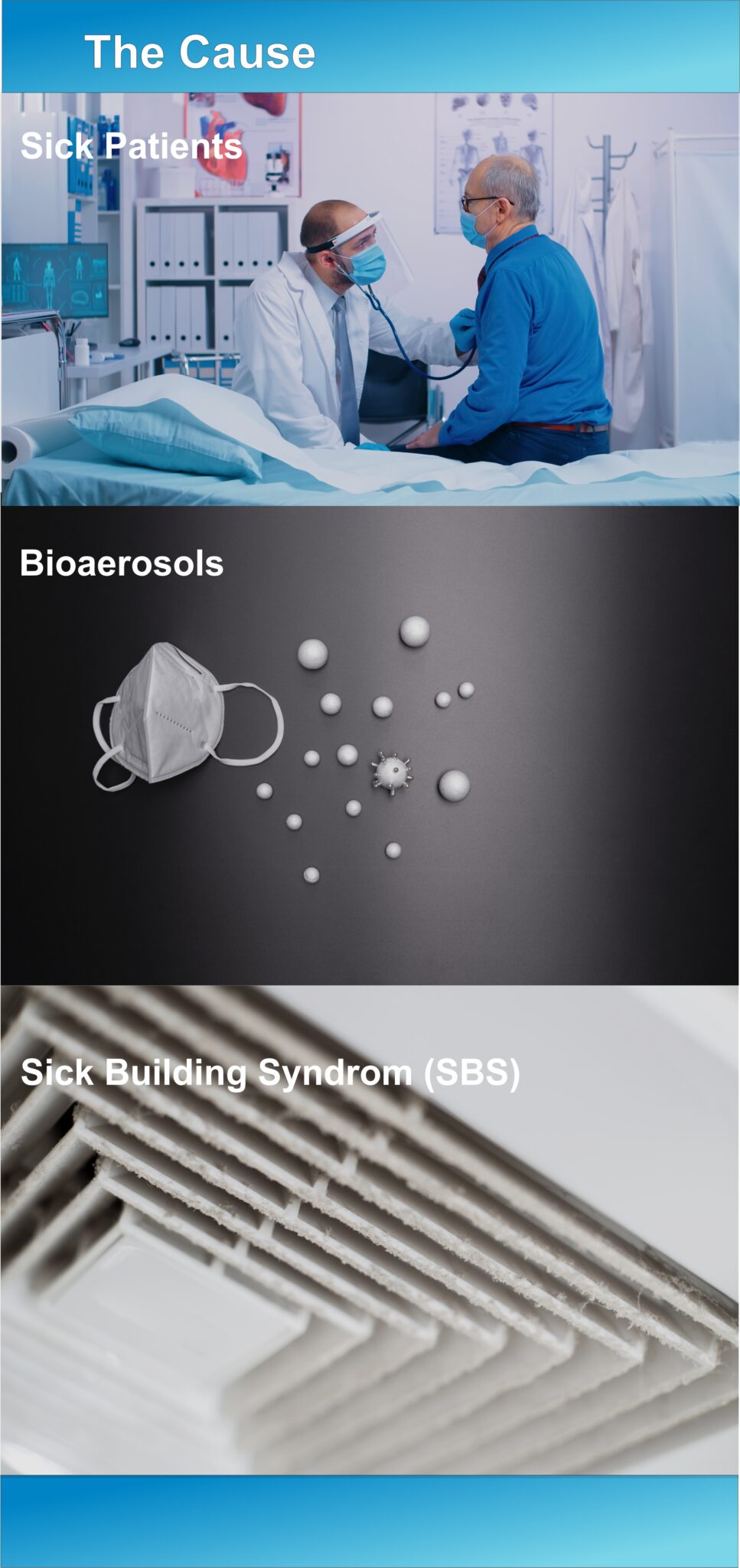
Sick patients exhale droplets and aerosols that can remain suspended and move with airflow across suites and corridors. Bioaerosols (bacteria, fungi, viruses, endotoxins, allergens) and VOCs from cleaning agents, disinfectants, and materials add to the burden. Over time, these can drive respiratory symptoms, reduced comfort, and building-related complaints. The practical plan is layered: reduce sources, ventilate, and apply HEPA + carbon filtration near where people gather and where odours/VOCs arise. For clinicians, that typically includes waiting, exam/treatment, procedure prep, and staff rooms. See Air Education for basics and Technology for stage-by-stage control. CDC+1Canada.ca
The Solution: 7-Stage Air Purifiers for Healthcare
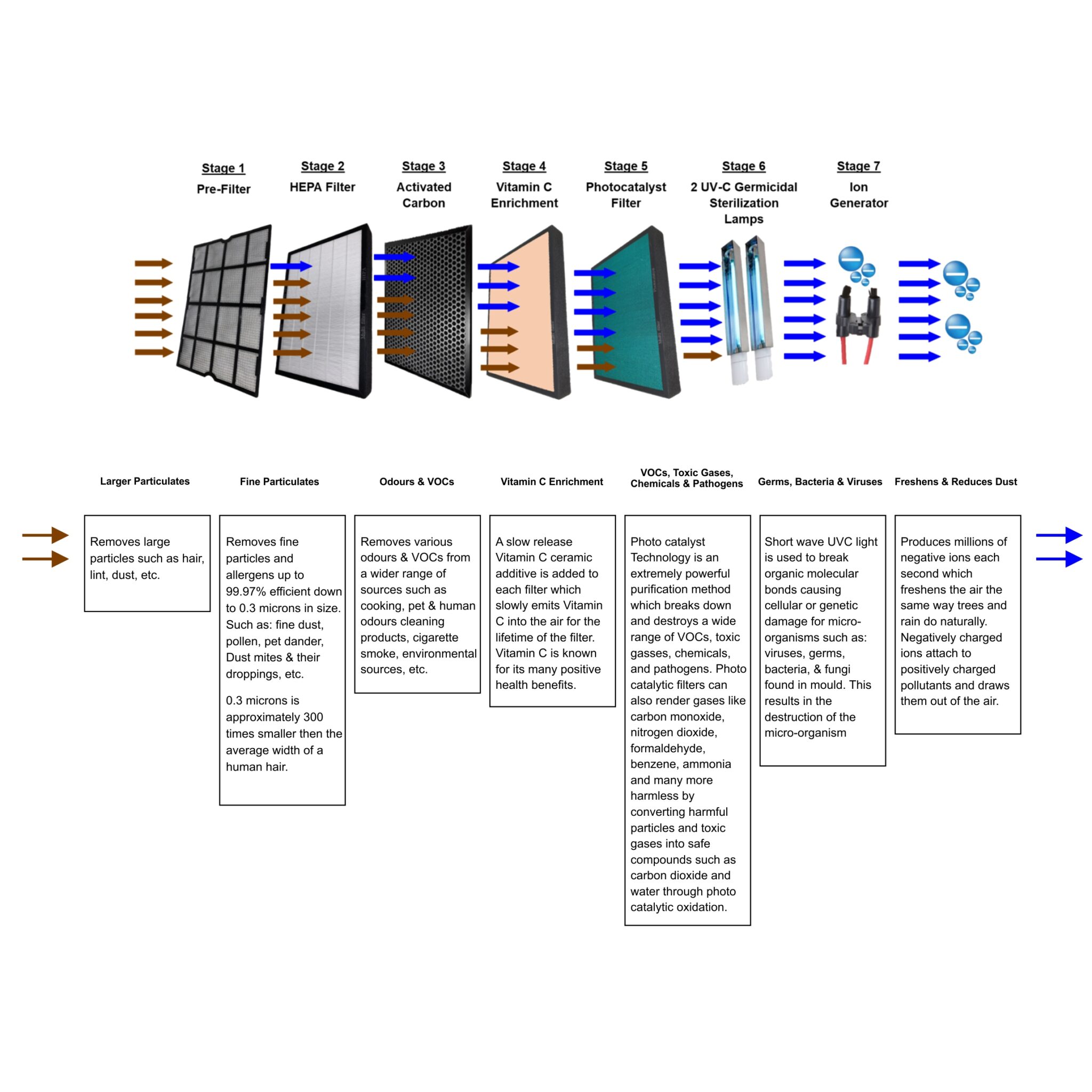
Our 7-Stage Filtration draws room air through a pre-filter and HEPA for fine particles (including those in respiratory aerosols), then through activated carbon for gases/odours. Advanced stages (UV-C/PCO and ionization) add another line of defence—an advantage over typical 3–4-stage designs. Place units in waiting, exam/treatment, procedure support, and staff areas. Run continuous low during occupancy, then step up between patients or at close. For setup and care, see Instructional Videos and Manuals. CDC
Before You Buy (correct, standards-aware guidance)
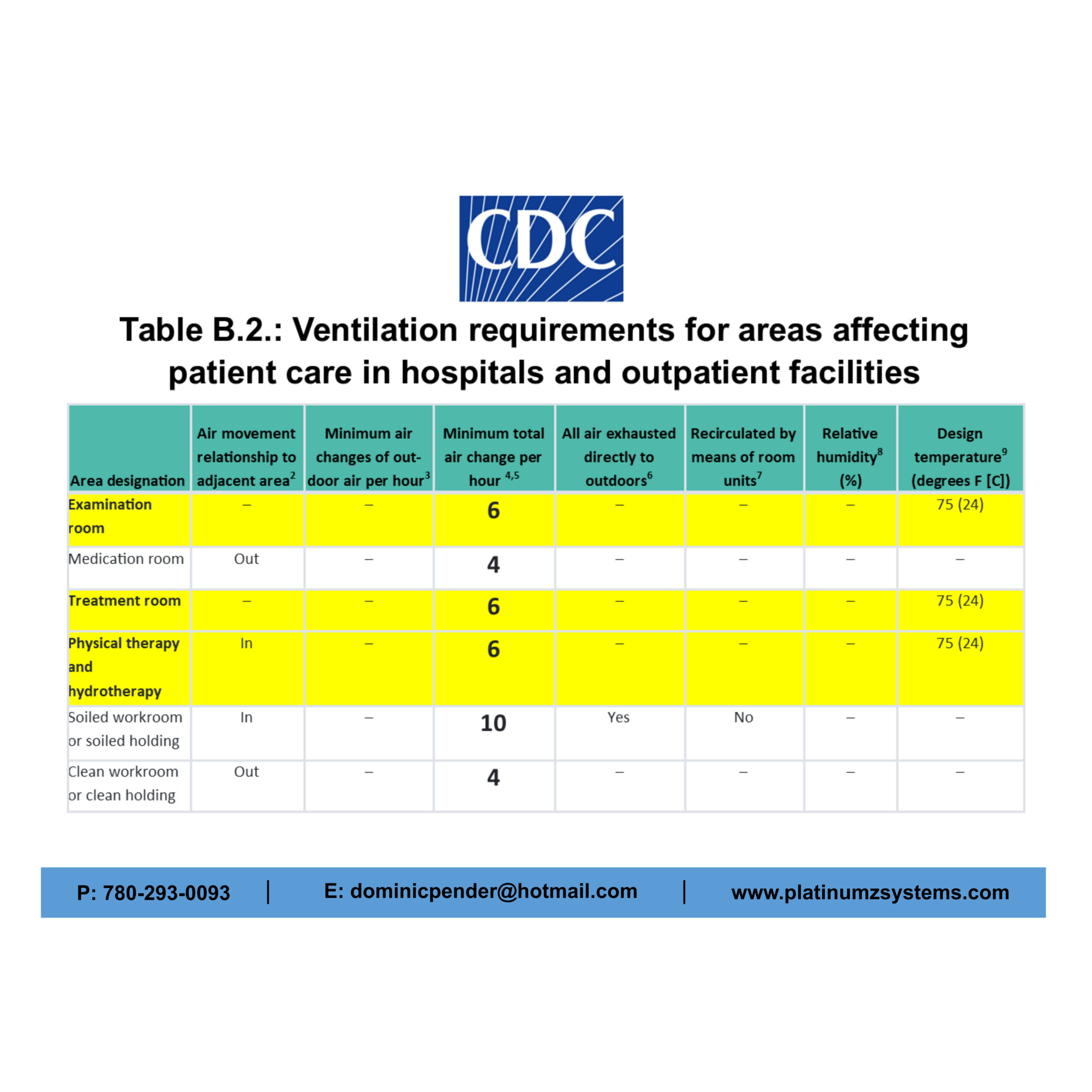
In healthcare, target clean air rather than only square footage. CDC encourages aiming for ≈5 or more ACH of clean air using ventilation and/or portable HEPA units. Many spaces governed by ASHRAE Standard 170 specify about 6 total ACH or more for certain exam/treatment rooms; portable HEPA can supplement central systems to reach those goals. Use CADR/ACH math to right-size units, and confirm with your facility engineer. For help, Request a Clinic Walkthrough or Explore Our Products; see Manuals for model specifications. CDC+1ASHRAE
Why “square-foot ratings” can mislead: many consumer ratings assume ~2 ACH (typical for household use). To reach 5–6+ ACH, you often need more clean-air delivery than the box suggests. NIOSH shows how adding portable HEPA adds to your room’s clean airflow; the formula is straightforward (ACH = clean CFM × 60 ÷ room volume). CDC