Clean Air For Retirement Homes
Air Purifiers for Retirement Homes — Safer Air for Residents & Staff
Retirement living deserves consistently clean, quiet air. The air purifiers for retirement homes from Platinum Z deliver senior living air purification that supports resident comfort, staff wellness, and family confidence. We pair HEPA for fine particles with activated carbon for odours/VOCs and size systems by CADR/ACH so dining rooms, activity spaces, corridors, and suites stay fresher—day and night. To see what fits your building, request a walkthrough and demo now via Book a Retirement Home Demo.
— EPA (HEPA + carbon), Health Canada (choosing CADR), NIOSH (aim for ≥5 ACH) US EPA+2Government of Canada+2
Why Clean Air Matters in Senior Living
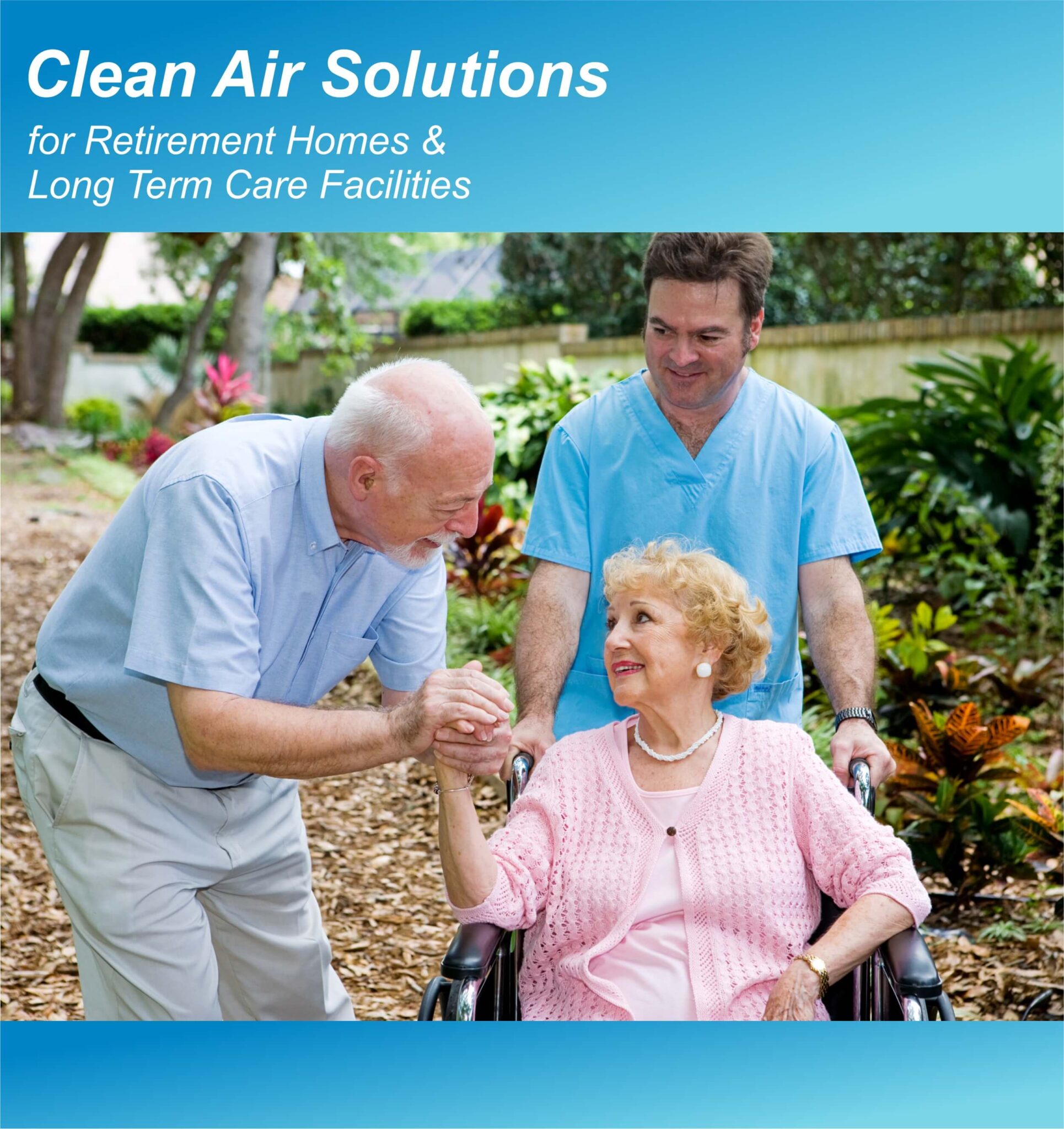
Older adults face higher flu risks, and busy care settings can amplify exposure. Clean air strategies—ventilation + portable HEPA—help reduce airborne particles that carry viruses and irritants. Our care home air purifiers run quietly in common areas and private rooms, supporting comfort without disrupting routines.
— CDC (65+ risk), PHAC (65+ risk & prevention), NIOSH (HEPA fan/filtration) CDC+2Government of Canada+2
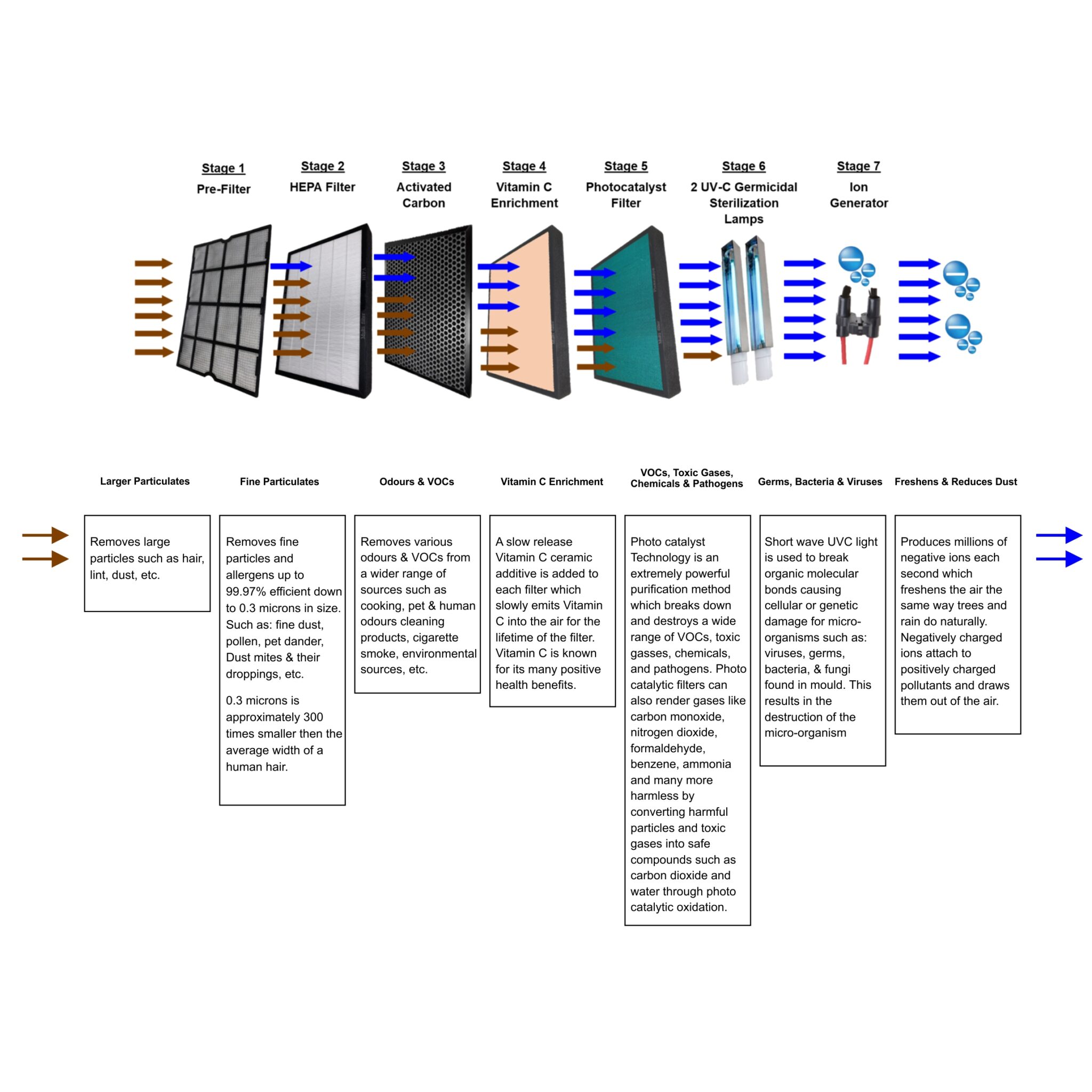
Consider 7-Stage Filtration to see the layers at work.
How Illness Spreads Indoors
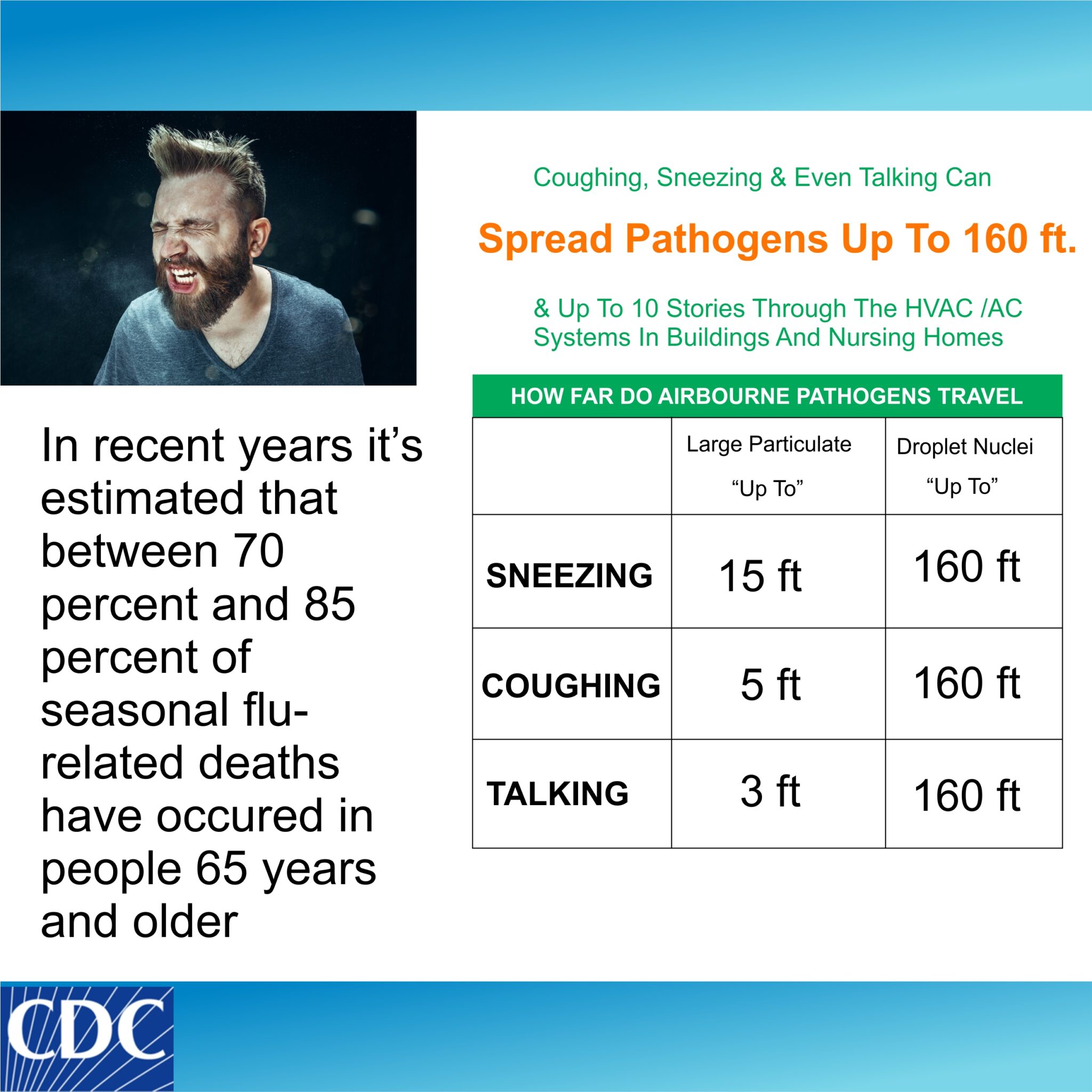
Coughing, sneezing, and even talking release droplets and respiratory aerosols that can linger and move with room airflow or through HVAC—well beyond arm’s length. In congregate living, lowering background particle levels throughout the day, then boosting filtration during peaks (meals, group activities, family visits) helps. Your graphic/table can illustrate that larger droplets fall sooner while fine aerosols can travel farther with airflow; distances vary by room and ventilation.
— CDC/NIOSH (ventilation & clean air guidance), Health Canada (ventilation basics) CDC+1
For a sizing check on dining rooms and lounges, Book a Retirement Home Demo so we can confirm CADR/ACH for each space.
— AHAM (CADR guidance) Government of Canada Publications
Sick Building Symptoms in Long-Term Care (SBS)
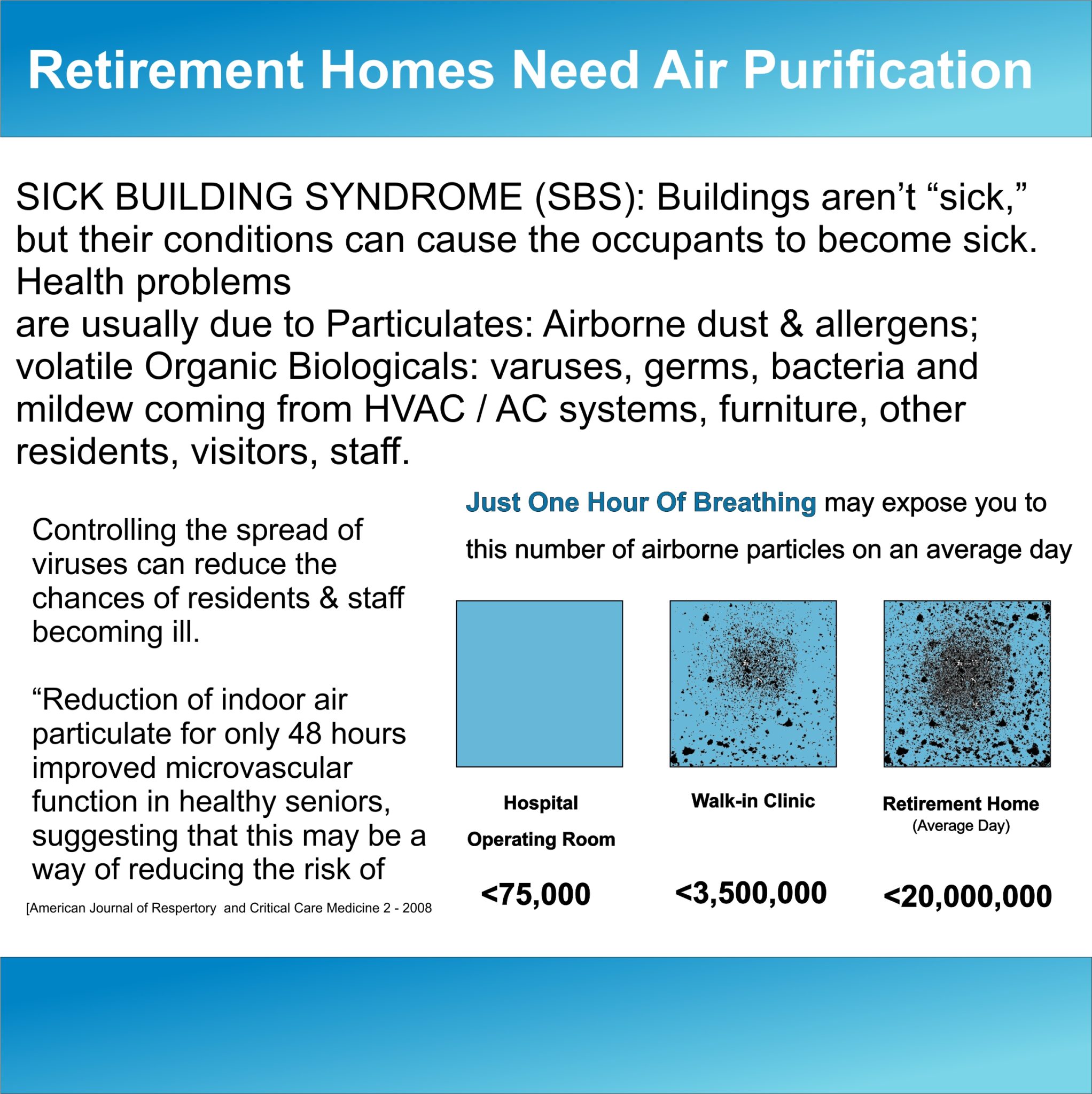
“Sick building” symptoms—eye/throat irritation, headaches, fatigue—often track with time spent indoors and poor ventilation. Long-term care air quality improves when you (1) reduce sources (low-VOC products), (2) increase ventilation where feasible, and (3) add HEPA air purifiers for seniors with carbon for odours/VOCs. This layered approach is practical, fast to deploy, and resident-friendly.
— EPA SBS factsheet; Health Canada IAQ resources for professionals US EPA+1
Point families and staff to Air Education and Sick Building Syndrome for simple, trust-building explanations.
The Solution: 7 Stages > 3–4 Stages
Our 7-Stage Filtration combines a pre-filter + HEPA for fine particles (dust, smoke, allergens) and activated carbon for odours/VOCs. Advanced stages add another line of defence—useful when ventilation alone can’t keep up. We then right-size by CADR to help you reach clean-air targets (ACH) in suites, corridors, and common areas—and we keep performance steady with Free Annual Service.
— EPA guide (HEPA + carbon & CADR is particle-rated), NIOSH (Aim for ≥5 ACH) US EPA+1
Ready to see placement and coverage? Book a Retirement Home Demo and we’ll map rooms, confirm ACH, and recommend Platinum Z XXL or Platinum Z XL where they fit best.
Before You Buy: Size by Room & Season
Right-size purifiers by room volume and ACH goals. As a quick rule, match CADR to room size (and aim higher during wildfire smoke). In Alberta, seasonal smoke can elevate indoor PM; a portable HEPA unit with carbon helps maintain comfort while windows stay closed. We’ll validate sizing for dining rooms, lounges, and memory-care areas and plan a simple filter cadence.
— Health Canada (CADR/how to choose), MyHealth Alberta (wildfire smoke actions), Alberta Health Services (post-wildfire IAQ) Government of Canada+2MyHealth Alberta+2
Book a Retirement Home Demo for a no-pressure sizing and placement plan.