Clean Air At Work
Cleaner Office Air—Quiet, Effective Protection for Teams and Clients
Air purifiers for offices help reduce airborne particles, odours, and VOCs in open offices, boardrooms, reception, and shared amenities—without adding noise or maintenance headaches. Our 7-Stage Filtration combines HEPA (fine particles) with activated carbon (odours/VOCs) to support everyday comfort and productivity. Start with How It Works to see 7-Stage Filtration, Technology, Features, and Real Results; then Explore Our Products or Request an Office Walkthrough for CADR/ACH sizing, placement, and noise-level tuning. For quick DIY wins, see Instructional Videos and Manuals. CDCUS EPAGovernment of Canada
(Alberta notes: wildfire smoke and winter recirculation can elevate indoor pollutants. Layer ventilation + portable HEPA to keep clean-air levels steady during seasonal spikes.) CDCAHAM Verifide –
The Importance
Why Clean Office Air Matters (and Not Just in Old Buildings)
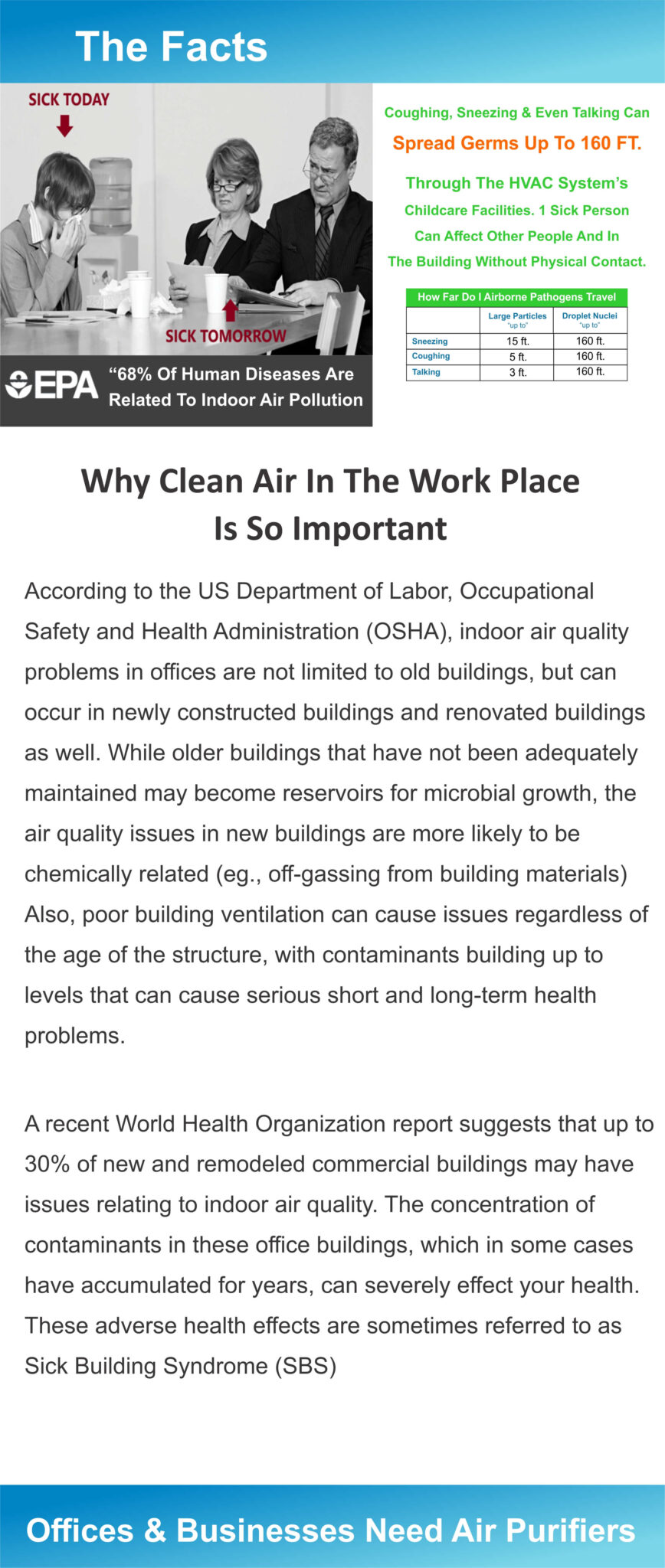
IAQ issues show up in new and renovated offices too—tight envelopes, fresh furnishings, and busy print/meeting areas can raise particles and VOCs if ventilation lags. OSHA highlights building operations and ventilation as core to prevention; WHO experts estimate up to 30% of new/remodelled buildings see IAQ complaints. A practical plan works best: reduce sources, ventilate, and filter what remains with HEPA + carbon. Learn how our technology works and compare models in Explore Our Products. OSHA+1US EPA
What Is Sick Building Syndrome
Sick Building Syndrome (SBS): What it is, why it lingers
SBS describes non-specific symptoms linked to time spent in a building—often worse while at work and better after leaving. Contributors include ventilation shortfalls, VOC-emitting materials, and elevated fine particles. Address it with source control + ventilation + filtration, then verify basics: filter changes, air change targets, and device placement. See Air Education and Sick Building Syndrome for a quick primer. US EPAPMC


Common SBS Symptoms in Offices
- Headaches
- fatigue
- nausea
- trouble focusing
- irritated eyes/skin
- congestion/runny nose
- scratchy throat
- cough/shortness of breath
- hoarse voice
- asthma flares in sensitive staff. If symptoms ease when away from work, look at ventilation, sources, and portable HEPA placement in affected zones first. US EPA
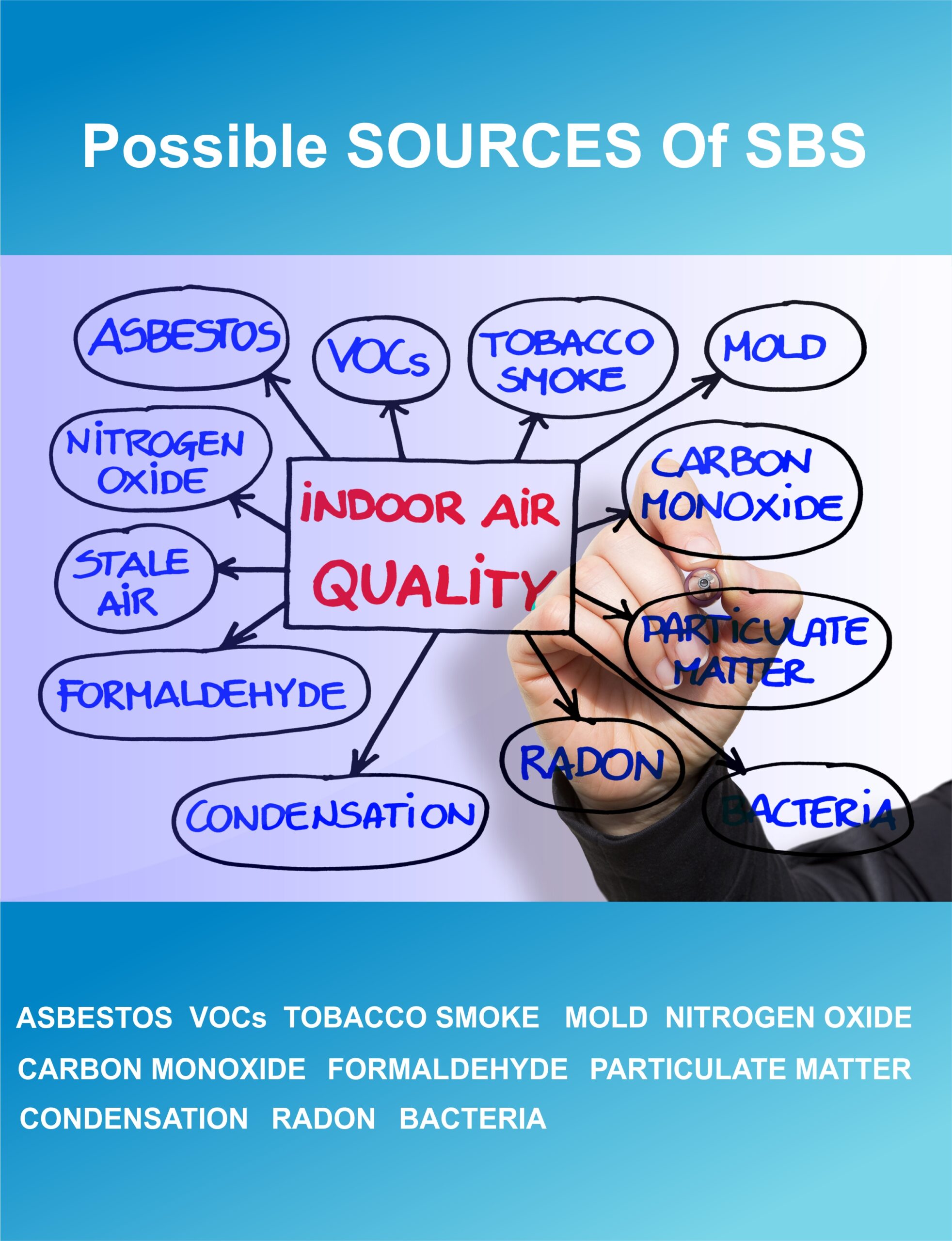
What Drives Complaints (Typical Office Sources)
-
Ventilation/filtration gaps: recirculation without enough outdoor air or filter MERV/HEPA capacity. Government of Canada
-
VOC off-gassing: paints, carpets, furniture, and cleaners.
-
Office equipment by-products: printers/copiers can emit ultrafine particles; locate and filter. ACS PublicationsQUT Research
-
Legacy materials: renovation can disturb contaminants; coordinate IAQ during/after works. OSHA
-
Vehicle infiltration: attached or underground parking near intakes.
What to do next: reduce sources, increase clean-air delivery (ACH), and add HEPA + carbon near the source and where people gather. See Technology and How It Works for details. CDCAHAM Verifide –

Personal Space, Shared Results
Fragrances, cooking odours, and everyday dust can distract and fatigue teams. A quiet office air purifier in a workstation or private office lowers particle load and helps sensitive staff focus. Run units 24/7 on low for steady clean air; step up after meetings or printing surges. For fast setup and care, see Instructional Videos and Manuals. US EPA
Printers Can Spike Fine Particles—Here’s a Simple Fix
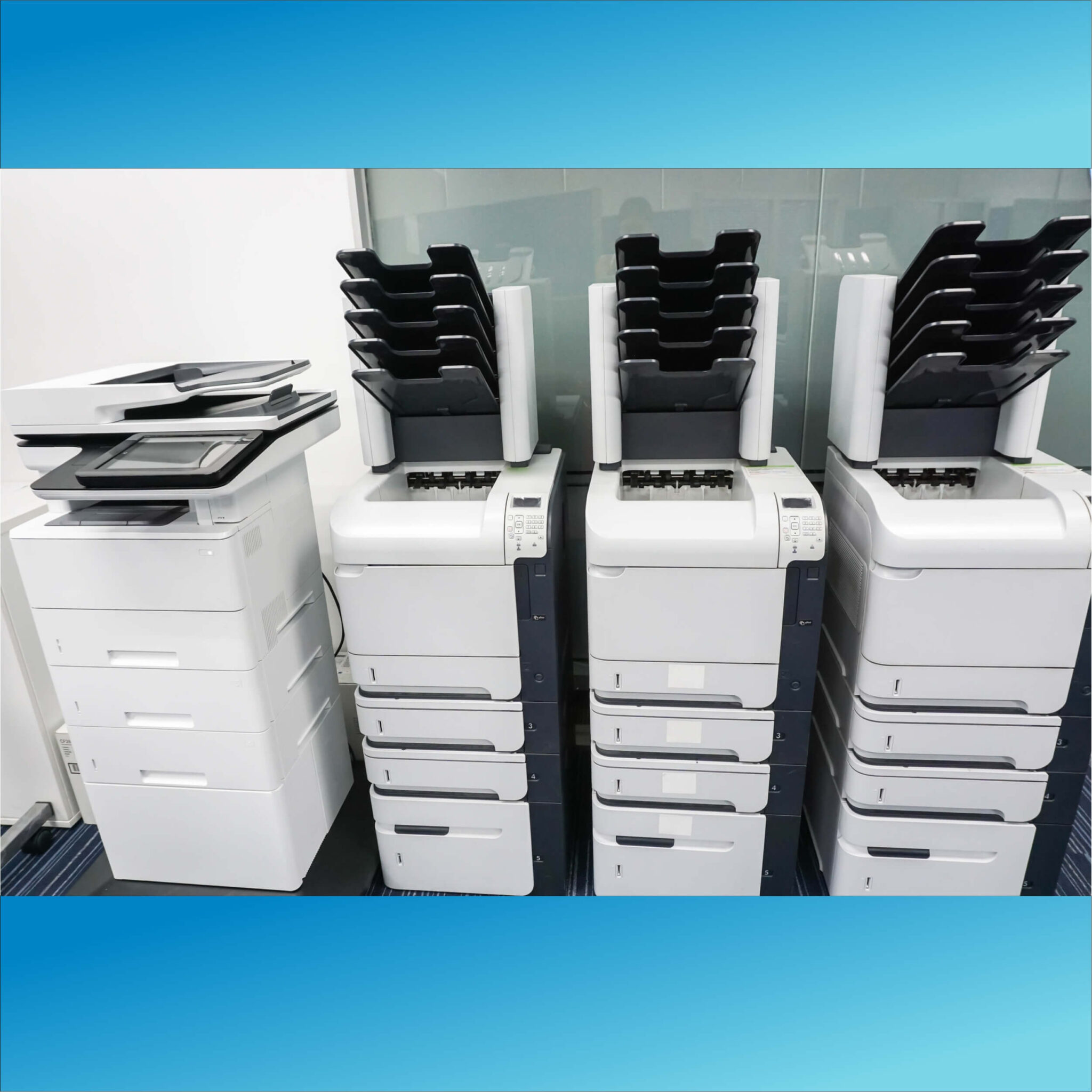
Research has shown a share of laser printers are high emitters of ultrafine particles during active printing, raising nearby concentrations. Place printers in ventilated nooks, add HEPA nearby, and schedule bigger jobs off-peak. Our 7-Stage Filtration captures particles and carbon helps with odours. For placement help, Request an Office Walkthrough. ACS PublicationsQUT Research
Ready to plan coverage for boardrooms, open offices, reception, and print areas? Explore Our Products, review 7-Stage Filtration, or Request an Office Walkthrough for CADR/ACH sizing.