Clean Air For Schools
Air Purifiers for Schools — Cleaner Classrooms, Healthier Learning
Schools run better with cleaner air. Our air purifiers for schools pair HEPA for fine particles with activated carbon for odours/VOCs and are sized by CADR/ACH to fit classrooms, offices, gyms and libraries. This layered approach supports attendance, comfort and focus—without adding noise. To see the best fit for your building, Book a School Demo and we’ll map spaces, confirm targets, and recommend placements.
— EPA (HEPA + carbon), Health Canada (choosing by CADR), CDC/NIOSH (aim for 5+ ACH) US EPA+2Government of Canada+2
School Indoor Air Quality: Why It Matters
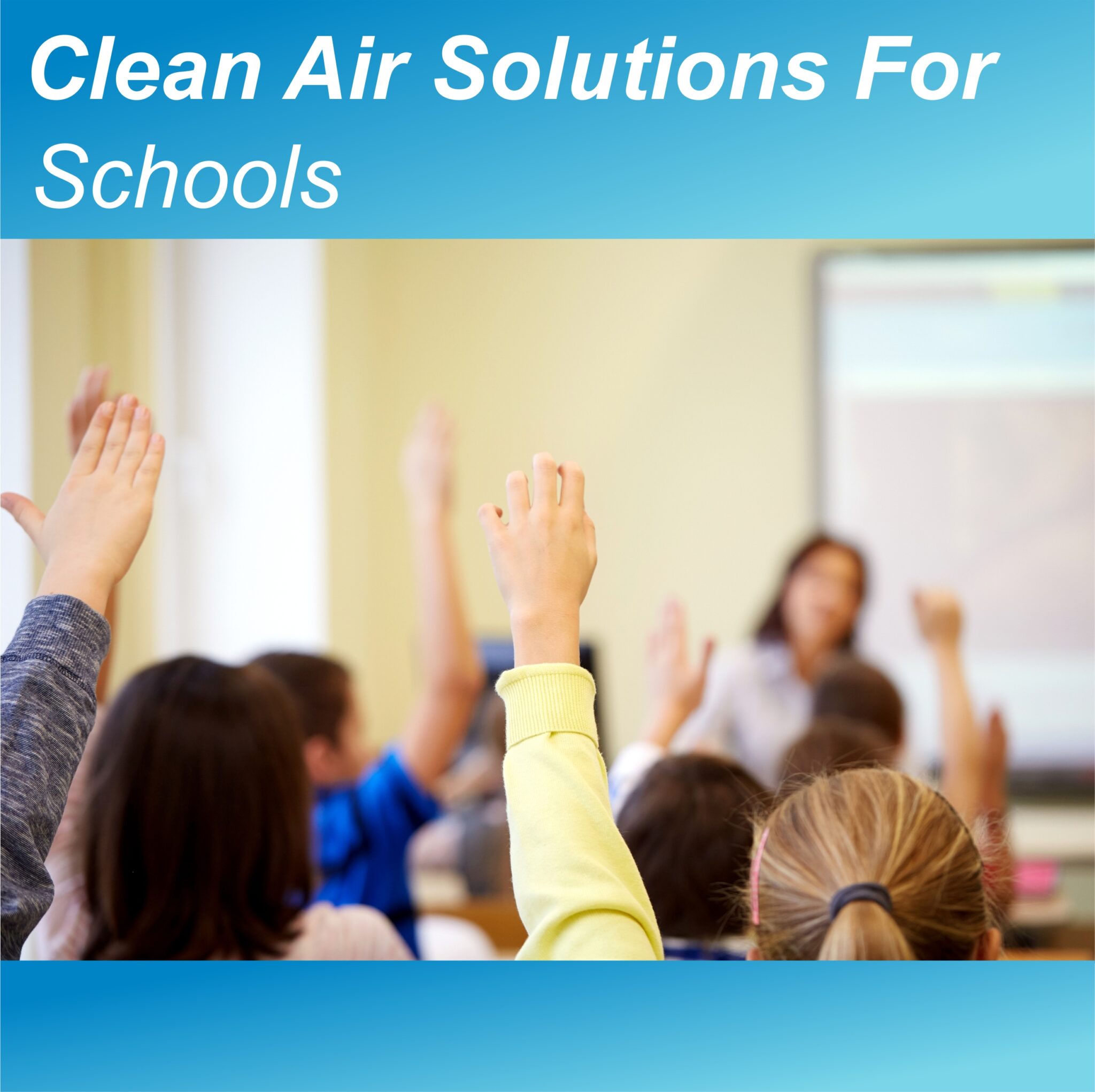
We spend close to 90% of our time indoors—including at school—so indoor air quality (IAQ) affects students, teachers, custodial and office staff. Cleaner air helps reduce particles, odours and irritants that can distract learners and burden staff. Source control, ventilation and filtration work together.
— EPA (90% indoors; IAQ basics) US EPA
See Air Education for plain-language IAQ basics and 7-Stage Filtration for how our layers work.
Myth: Hand Sanitizer = Clean Air (It Doesn’t)
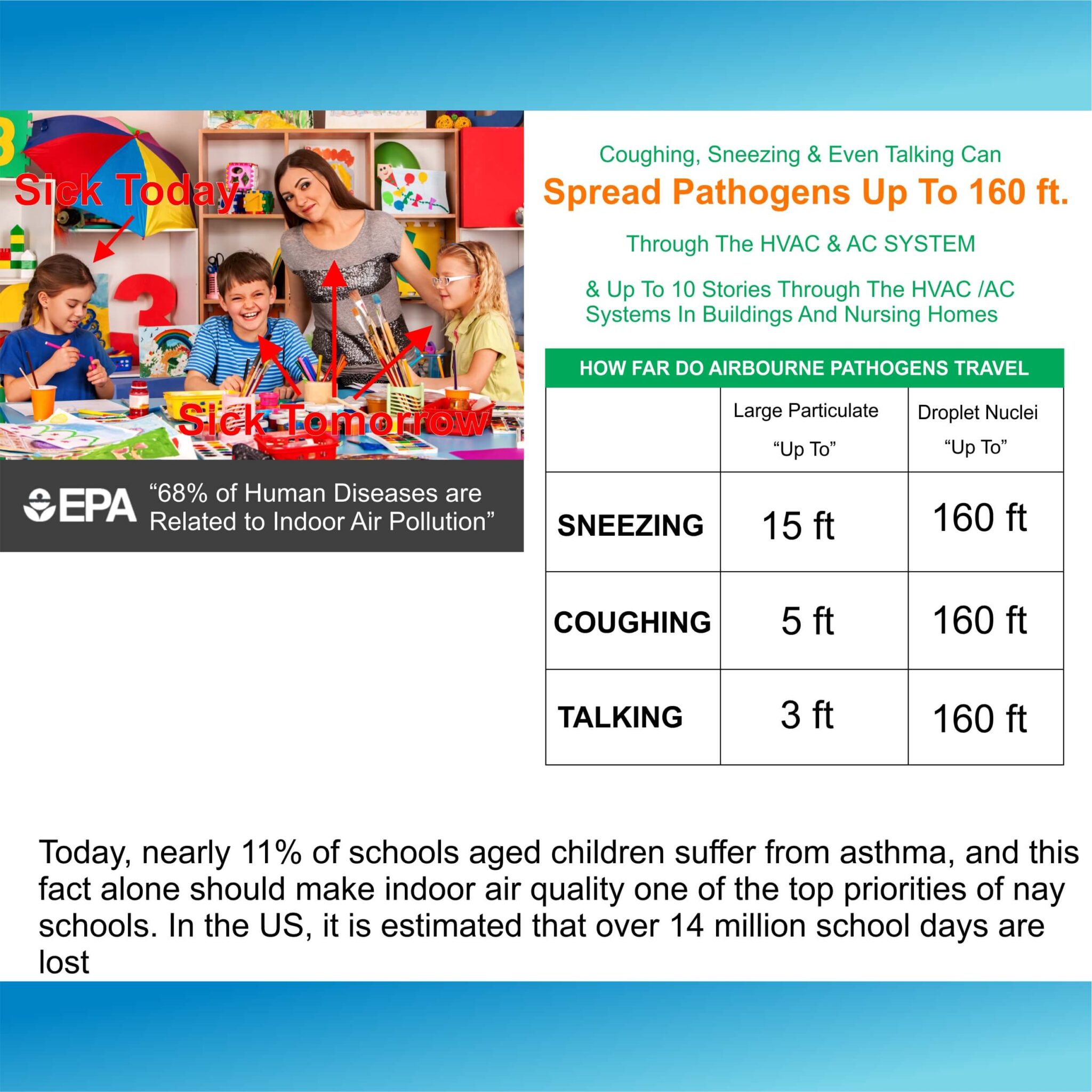
Hand sanitizer reduces contact spread, which matters for surfaces and hand-to-face transfer. However, colds and flu also spread through respiratory aerosols in shared air; sanitizer can’t address that route. You still need good ventilation and portable HEPA air purifiers for classrooms to lower particle levels.
— CDC/NIOSH (ventilation in schools) CDC

Fact: Cleaning the Air Reduces Spread
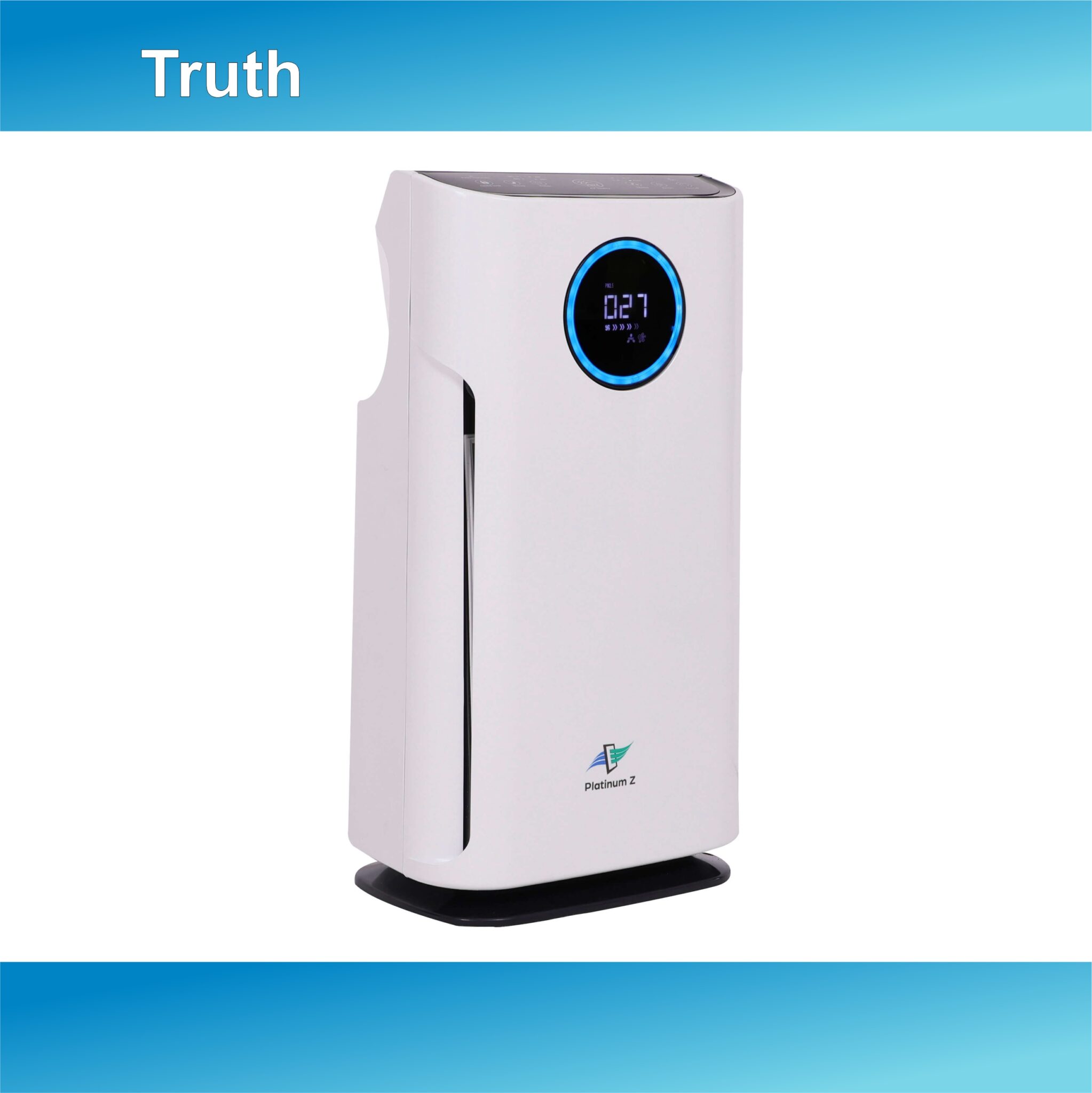
In busy rooms, talking, singing and coughing generate aerosols that can linger. Aim for at least 5 ACH of clean air (ventilation + filtration) to help reduce airborne concentrations. A HEPA unit sized by CADR adds “equivalent clean air” on top of existing ventilation; UVGI (UV-C inside the unit) can add microbe inactivation when designed appropriately.
— CDC/NIOSH (5+ ACH clean air), Health Canada (choose by CADR), LBNL Healthy Schools (clean ACH concept) CDC+2Government of Canada+2
For placement and sizing help, Book a School Demo and see Technology for the advanced stages we use.
The Facts: Size by CADR, Plan for 5+ ACH
Right-sizing matters. As a rule of thumb, choose a purifier with CADR ≈ two-thirds of room area (ft²), and consider higher CADR during wildfire smoke. Then add ventilation + filtration to meet or exceed ~5+ ACH of clean air in classrooms. We’ll confirm numbers for each room and propose quiet locations.
— AHAM (2/3 CADR rule; smoke guidance), CDC/NIOSH (5+ ACH) AHAM Verifide –+1
See Instructional Videos for quick placement tips and Manuals for filter care intervals.
The Cause: Sick-Building Symptoms in Schools
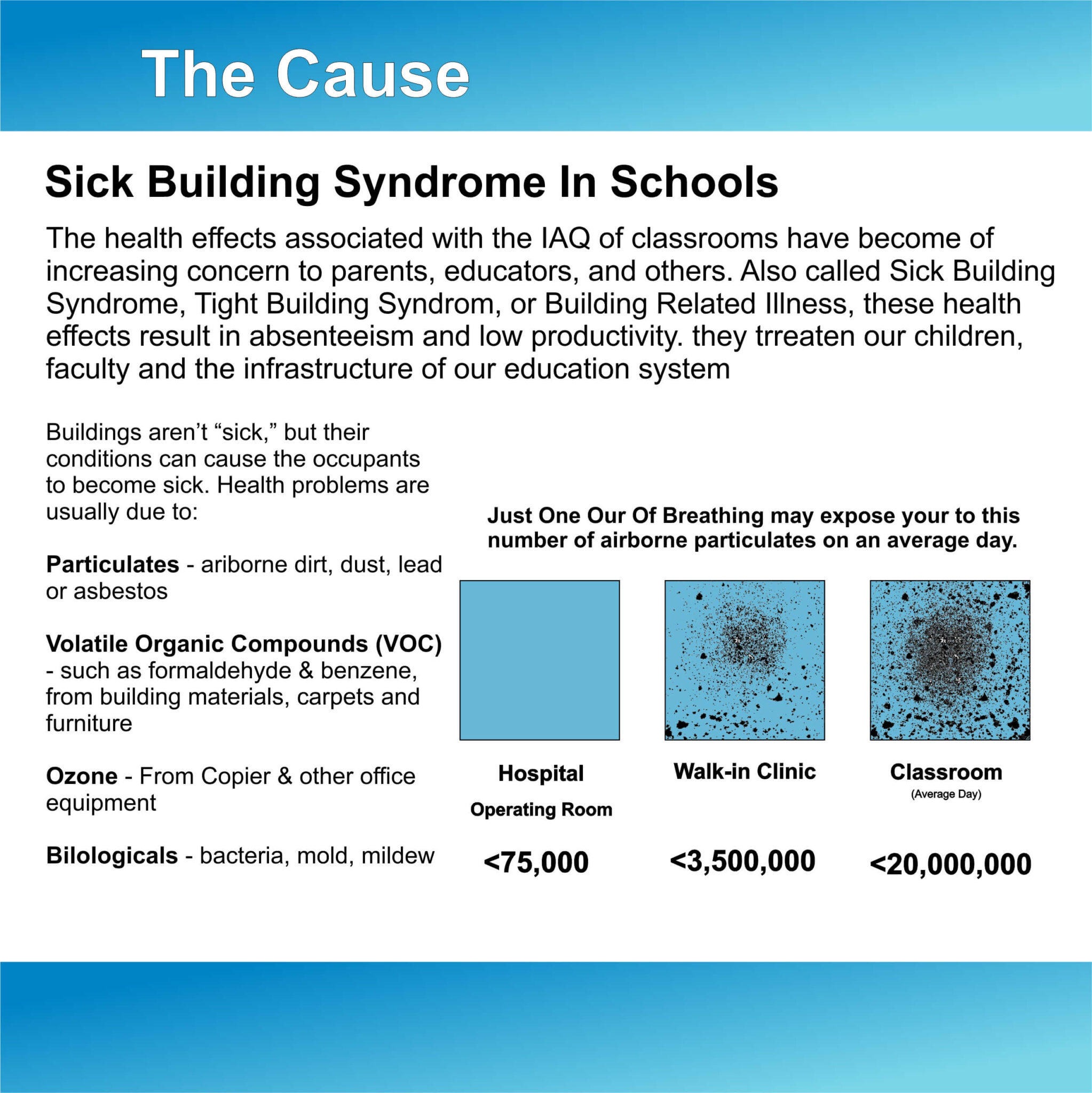
“Sick Building Syndrome” symptoms—headache, throat/eye irritation, fatigue—often track with stale air, VOCs and particles from markers, furnishings, labs and shops. Improve outcomes by reducing sources (low-VOC supplies), increasing ventilation where feasible, and adding classroom air purification with HEPA + carbon to capture particles and odours/VOCs.
— EPA (SBS & IAQ), Health Canada (IAQ resources) US EPA+1
Why Clean Air in Schools Is So Important
Click Here To Read More
1) What’s driving poor indoor air quality in schools?
School IAQ is complex: problems come from classroom activities and the building itself. Even “clean” rooms can expose students and staff to pollutants—crowding (pathogens), cleaning products (VOCs), computers/printers (ozone/particles), carpets/furniture/paint (formaldehyde/VOCs), water damage (mould), construction (fine dust), under-filtered HVAC, and ineffective cleaning. Therefore, start with source control, better ventilation, and classroom air filtration.
— EPA Schools IAQ • Health Canada IAQ
https://www.epa.gov/iaq-schools • https://www.canada.ca/en/health-canada/services/air-quality.html
Air Education, 7-Stage Filtration
2) How big is the problem?
Government reviews have found widespread IAQ concerns in K–12; when contaminants accumulate, comfort, health, and even facilities budgets can suffer. Preventive maintenance and targeted school air purification cut risk sooner—and for less—than large remediation later.
— EPA IAQ Tools for Schools • U.S. GAO K-12 facilities
https://www.epa.gov/iaq-schools/indoor-air-quality-tools-schools • https://www.gao.gov/k12
3) What are the health and learning impacts?
At lower levels, pollutants can reduce attention and concentration; at higher levels they drive headaches, congestion, cough, eye/skin irritation, and fatigue. Meanwhile, asthma affects roughly 1 in 10 school-aged children, adding missed days. Cleaner air from air purifiers for schools—sized by CADR/ACH—supports attendance and focus.
— CDC Asthma • EPA IAQ & student performance
https://www.cdc.gov/asthma/ • https://www.epa.gov/iaq-schools/iaq-and-student-performance
4) Which rooms deserve priority attention?
Beyond standard classrooms, some spaces generate more pollutants: machine/wood shops, chem/bio labs, art rooms, automotive bays, and PE/locker areas. First, review sources; next, plan classroom air purifiers sized by CADR; then, set a simple filter cadence.
— EPA (specialty spaces & sources)
https://www.epa.gov/iaq-schools
Book a School Demo (we’ll map priority rooms)
5) Why sanitizers aren’t enough (and what works)
Hand sanitizer reduces contact spread; however, airborne transmission travels via respiratory aerosols. Therefore, use a layered strategy: reduce sources, increase ventilation where feasible, and add HEPA air purifiers for classrooms with activated carbon for odours/VOCs. That way, you cover particles and gases.
— CDC/NIOSH (ventilation & layered protection) • EPA (Air Cleaners)
https://www.cdc.gov/niosh/ventilation/cleanair.html • https://www.epa.gov/indoor-air-quality-iaq/guide-air-cleaners-home
Technology, 7-Stage Filtration
6) How many units—and where should they go?
Start with room volume and target ~5+ clean ACH (ventilation + filtration). As a rule of thumb, choose CADR ≈ two-thirds of room area (ft²) and go higher during wildfire smoke. Then, place units where air mixes (clear intakes/exhausts, avoid corners/returns), run low continuously, and boost after activities. This is how classroom air filtration quietly meets goals.
— AHAM (CADR rule) • CDC/NIOSH (5+ clean ACH) • Health Canada (choosing by CADR)
External: https://ahamverifide.org/choose-right-air-cleaner/ • https://www.cdc.gov/niosh/ventilation/cleanair.html • https://www.canada.ca/en/health-canada/services/air-quality/portable-air-purifiers.html
Book a School Demo
7) What ongoing care is needed?
Filters and seals work hard in schools. Follow the model schedule in Manuals; then adjust after the first term. We simplify upkeep with Free Annual Service and short Instructional Videos for quick swaps. As a result, performance stays consistent—without extra work for staff.
— EPA (maintenance improves performance)
External: https://www.epa.gov/indoor-air-quality-iaq/guide-air-cleaners-home
Internal: Manuals, Instructional Videos, Free Annual Service
The Solution: 7-Stage School Air Purification
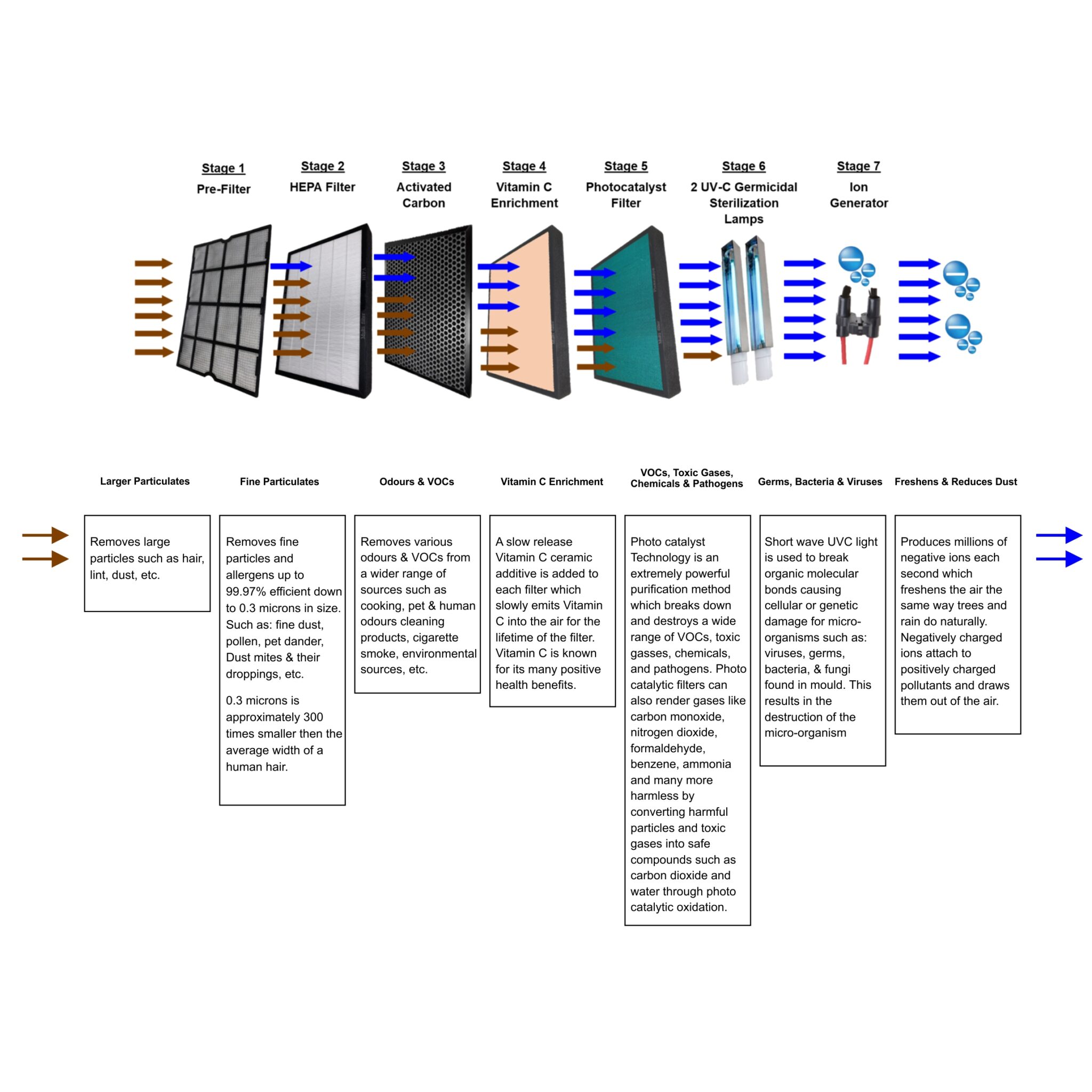
Our 7-Stage Filtration starts with a pre-filter and HEPA for fine particles (dust, smoke, allergens), then activated carbon for odours/VOCs. Advanced stages add another line of defence when ventilation alone can’t keep up. We then right-size by CADR/ACH so classrooms, offices and libraries get consistent clean air—quietly.
— EPA (HEPA + carbon), Health Canada (CADR), CDC/NIOSH (clean-air ACH) US EPA+2Government of Canada+2
Learn how the stages work in Technology, then Book a School Demo for a no-pressure sizing plan.
The Solution: 7-Stage School Air Purification
Our 7-Stage Filtration starts with a pre-filter and HEPA for fine particles (dust, smoke, allergens), then activated carbon for odours/VOCs. Advanced stages add another line of defence when ventilation alone can’t keep up. We then right-size by CADR/ACH so classrooms, offices and libraries get consistent clean air—quietly.
— EPA (HEPA + carbon), Health Canada (CADR), CDC/NIOSH (clean-air ACH) US EPA+2Government of Canada+2
Learn how the stages work in Technology, then Book a School Demo for a no-pressure sizing plan.
We’ll map rooms, confirm CADR/ACH, and recommend placements that fit bell schedules and noise limits. Book a School Demo to get your plan.